Keith said I had a glazed look in my eyes as we sat in the conference room at the MOFGA educational facility in Unity yesterday. I was high on the excitement and pure joy of participating in the Pollinator Conservation Planning Short-Course offered by the Xerces Society.
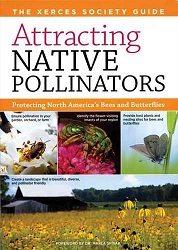
I first learned about the course last year when I was up to my neck in research, studying pollinators and how to promote them. The Xerces Society offers a myriad of free resources and articles on their site, and I even went so far as to order their book “Attracting Native Pollinators”, which is an incredible resource. They offer the short-course at locations around the country, but at the time there were no scheduled visits to Maine, so I submitted my name to their notification list and this year I got the word.
Xerces was coming to Maine–and practically in my backyard, too! The Maine Organic Farmers and Gardeners Association (MOFGA) in Unity hosted the course, and that’s about an hour’s drive for us. Add the facts that Keith has Tuesdays off and I even managed to wrangle a sitter so that we could go together–and it was like fate wanted me to be able to attend this event.
Eric Mader is the Assistant Pollinator Program Director for the Xerces Society. He works to raise awareness of pollinator conservation techniques among growers and governmental agencies, and has worked as a beekeeper and crop consultant, as well as authoring several books and government management plans for native pollinators. Eric came to MOFGA on Tuesday, May 15th, to present the course and answer questions for us. He claimed to be an uncomfortable public speaker, but despite that he was engaging and knowledgeable, even humorous at times.
The Pollinator Conservation Course began with some background information about the Xerces Society, which was founded in 1971 and was initially a butterfly conservation project–even being named after the first butterfly in North America to go extinct due to human activities. Today the Xerces sponsors a number of major programs centered around endangered species, aquatic invertebrates, and pollinators.
There were seven modules, beginning with “The Importance of Pollinators”, then moving on through “Basic Bee Biology and Identification”, “Pollinator-Friendly Farming Practices”, and “Planning Pollinator Habitat” before a break for lunch.
We also heard from Alison Dibble, a university botanist who has been researching alternate forage for pollinators of the Maine wild blueberry, in partnership with the NRCS. She happened to mention that they are working on a paper that will list all of Maine’s 246 native species, that should be available in a year or so.
Then a couple of PhD students, Eric Venturini and Kalyn Bickerman talked about their research. Eric has been looking at using strips of pollinator plantings around the blueberry barrens to increase pollination of wild blueberries by native pollinators, while Kalyn has been studying the native bumble bees to determine their health and population numbers.
Finally, Sam Hanes of the Department of Anthropology at the university, has recently begun a project studying the perceptions held by farmers and gardeners regarding native pollinators. He’s looking to learn more about how growers use native pollinators, which factors affect pollination practices, and which perceptions matter most to growers (ie-effectiveness, monitoring, uncertainty, variability, etc.).
While research regarding honeybees and native bee populations has generally been overlooked by the academic community, Maine has been working to learn more about pollinators for years, and that is something Mainers can be proud of.
Once the university academics had finished their presentations, Eric continued along with the Xerces’ program, picking up with “Restoring Pollinator Habitat”, “Conservation Programs”, and “Additional Resources”.
As I mentioned earlier–there is a lot of free information and resources available at the Xerces Society’s website. But the main take-home message was this:
I’m still bubbling with elation in the days following the Pollinator Conservation Course–and I can’t even really say why. I have no idea why I’ve fallen so hard for pollinators–especially considering I was by no means an insect-lover as a child. Yet here I am–fascinated by pollinators and plants and the intimate relationship between the plant kingdom and the animal kingdom. I feel as though it is a grave injustice that insect pollinators are generally overlooked, and even shunned. It’s almost as if I never really saw the world around me until I began seeing the pollinators at work around me. How the world has changed for me! And my heart wants to protect it, to share the love of the beautiful process with the rest of humanity. So here I am.
This post was last modified on October 14, 2012 10:41 am
We sat on the low couch in a quiet room at the back of the…
Nobody photographs the fence. If you think about it—we photograph the garden inside the fence.…
QUICK NOTE: This story is from 2018. The FSA Beginning Farmer programs are still active…
This week I finally walked the back corner of my conservation acreage for the first…
Over the course of the last week, I’ve been out breaking trail in more ways…
QUICK NOTE: This story is from 2018. The FSA Beginning Farmer programs are still active…